The Dawn of the Dynamic Desktop
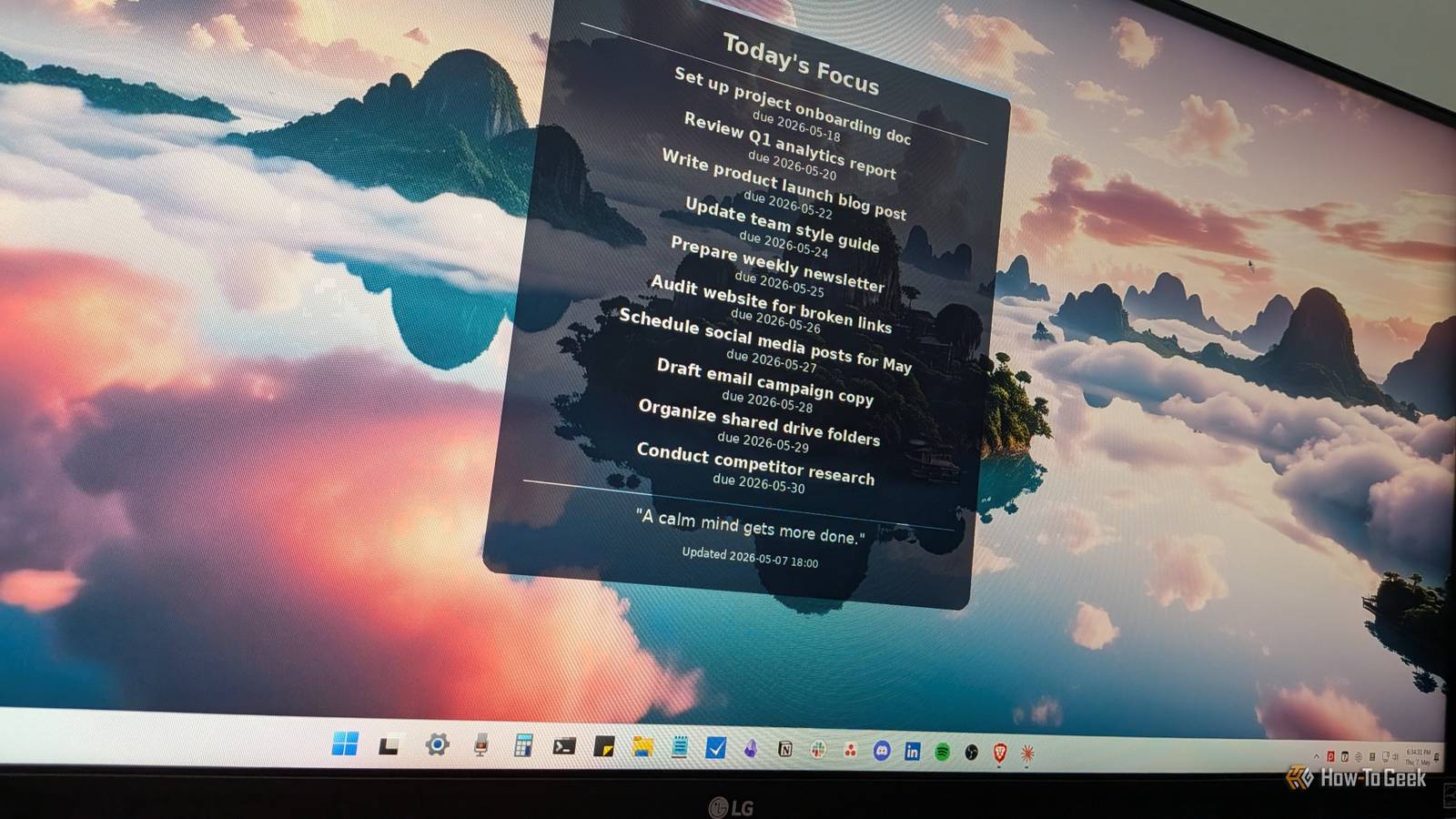
In a significant leap for personal productivity, Anthropic's Claude AI is enabling users to transform their desktop wallpapers into dynamic, deadline-aware task managers. This novel application moves beyond traditional calendar alerts and static to-do lists, offering a constant visual reminder of impending deadlines and priorities directly on the user's screen. The system ensures tasks are "always in sight and on your mind," effectively eliminating "deadline blind spots" for users.
This innovative approach leverages Claude's capabilities as an AI assistant that can reason through problems conversationally and integrate with various productivity tools. By connecting to platforms like Notion, Asana, and ClickUp, Claude can read task databases in real-time, including task names, due dates, and statuses. For tools without native connectors, users can even prompt Claude to "vibe-code" custom integrations using their APIs.
How Claude Crafts Your Custom Workspace
The core of this dynamic wallpaper system lies in Claude's ability to generate and execute code. Claude writes and runs Python scripts that utilize libraries like Pillow to manipulate images programmatically. These scripts take a base wallpaper, draw a semi-transparent card in the center, and then populate it with task names, due dates, and even short motivational quotes. The resulting image is a single flat JPEG that Windows can instantly apply as the new desktop background using its built-in SystemParametersInfo API.
For a truly hands-free experience, users can automate this process through a three-layer system. A scheduled task can call Claude every six hours to fetch current tasks and determine a "mood" for the day, such as calm, motivated, or urgent. Claude then selects an appropriate image from a specified folder, etches the tasks onto it, and saves it locally. A PowerShell script, using Windows' FileSystemWatcher, monitors the wallpaper file and triggers the API call to apply the new background almost instantly. This means a desktop can update every six hours, reflecting changes in deadlines with corresponding visual cues, from calm backgrounds for on-track tasks to urgent red cards for overdue items.
Beyond Wallpapers: Claude's Expanding Desktop Presence
The dynamic wallpaper feature is just one example of how Claude Desktop is evolving into a comprehensive AI workspace. Anthropic has been steadily enhancing Claude's capabilities, particularly through its "Computer Use" functionality, which allows the AI to interact with the actual computer interface, opening applications, clicking buttons, typing text, and navigating websites. This transforms Claude from a mere chatbot into an autonomous desktop assistant capable of handling real-world tasks.
Key features contributing to this expanded functionality include:
- Code Tool: Enables Claude to read and write files in specified folders, allowing for persistent outputs that survive beyond a single chat session.
- Connectors: First-party integrations with popular applications like Microsoft 365, Google, and Slack, installed through a "Customize" section in Claude Desktop.
- Skills: Reusable markdown files with instructions that allow Claude to follow specific standards for formatting, branding, and workflow.
- Plugins: Bundled packages that can include skills, agents, and connectors, offering more complete installable units.
Security Considerations and the Future of AI Agents
While the integration of AI into desktop environments offers significant productivity gains, it also introduces new security considerations. Recent findings by security research teams have highlighted vulnerabilities in Anthropic's Claude, including issues with Chrome extensions and the hijacking of OAuth tokens through Claude Code. One particularly concerning discovery revealed a critical vulnerability in Claude Desktop Extensions, where a single Google Calendar event could silently compromise a system, leading to remote code execution without user interaction. This vulnerability, which impacts over 10,000 active users and 50 Claude Desktop Extensions, underscores the importance of robust safeguards as AI agents gain more control over local systems.
Despite these challenges, the trend towards more autonomous and integrated AI assistants is undeniable. Users are increasingly leveraging Claude to manage complex schedules, triage inboxes, and automate routine administrative tasks. The ability of Claude to connect to various communication channels like email, WhatsApp, and SMS, and then parse information to organize tasks, points to a future where AI agents act as proactive "chiefs of staff," streamlining daily operations and enhancing personal accountability. As AI models like Claude Opus 4.7 continue to improve in areas like advanced software engineering and multimodal support, their capacity to perform complex, long-running tasks with precision will only grow, further blurring the lines between AI assistance and autonomous operation.
