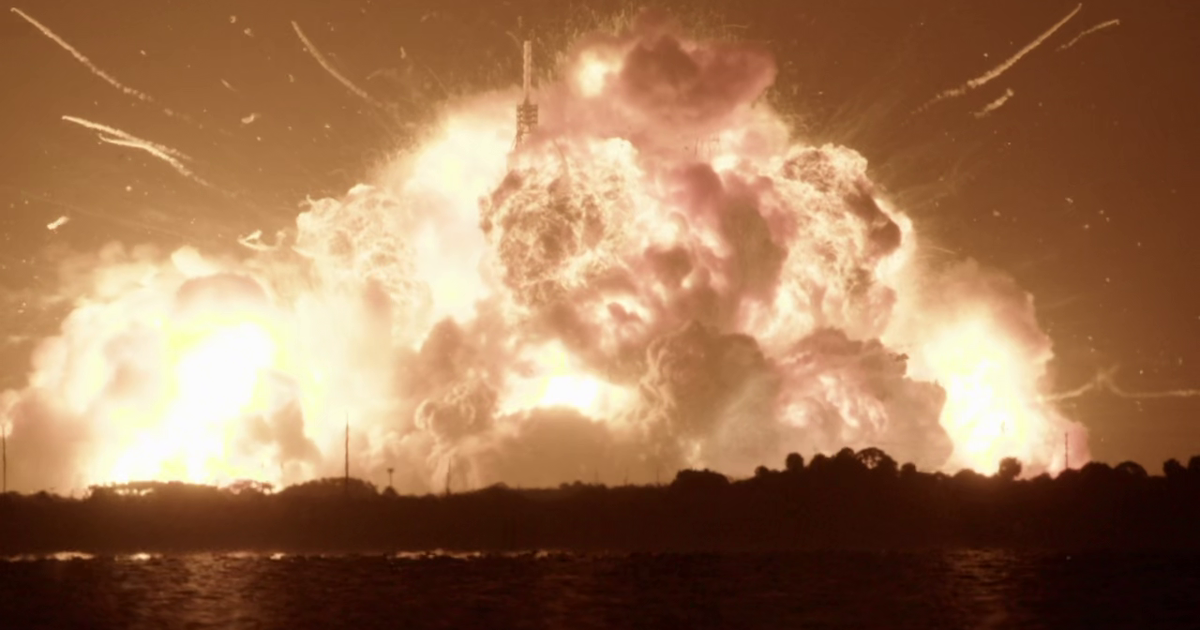
Catastrophic Explosion Halts New Glenn Program
A Blue Origin New Glenn rocket experienced a catastrophic explosion on Thursday night, May 28, 2026, during a static fire test at Launch Complex 36 at the Cape Canaveral Space Force Station in Florida. The powerful explosion, which occurred around 9 p.m. EDT, sent a massive fireball and billowing clouds of smoke into the night sky, visible for miles around. The rocket was fully fueled with methane and liquid oxygen for the test firing of its seven BE-4 first-stage engines when the anomaly occurred.
The incident resulted in the complete destruction of the 188-foot-tall first stage and the 86-foot-tall upper stage of the rocket. Furthermore, the explosion severely damaged the launchpad, including the erector-gantry used to move and raise the rocket, and one of two tall lightning towers was no longer visible. Blue Origin confirmed that all personnel were accounted for and safe, with no injuries or fatalities reported. Company founder Jeff Bezos acknowledged the "very rough day" but affirmed their commitment to rebuild and continue flying.
Immediate Repercussions for NASA's Artemis Program
The explosion of the New Glenn rocket represents a significant setback for NASA's Artemis program, which aims to return humans to the Moon. The New Glenn was slated to play a crucial role in these plans, including launching landers to the Moon for NASA. Just two days prior to the explosion, NASA had awarded Blue Origin a $188 million contract to deliver rovers to the lunar surface using its uncrewed cargo lunar lander, Mark 1.
NASA Administrator Jared Isaacman acknowledged the anomaly, stating that the agency would work with its partners to conduct a thorough investigation, assess near-term mission impacts, and provide updates on any effects to the Artemis and Moon Base programs. Experts suggest that this incident could significantly delay Blue Origin's involvement in the Artemis program, potentially taking them out of the picture for a year or more, and making SpaceX's Starship even more critical for future lunar missions. The Mark 1 lander is designed solely for the New Glenn rocket, and with its only launchpad severely damaged, Blue Origin's ability to test and launch the lander is compromised.
Setback for Amazon's Satellite Internet Ambitions
Beyond NASA's lunar ambitions, the explosion also deals a substantial blow to Amazon's Project Kuiper, its satellite internet constellation designed to compete with Elon Musk's Starlink. The destroyed New Glenn rocket was preparing for its fourth launch, scheduled for early June, to deploy 48 Amazon Leo internet satellites into orbit. While the satellites were not on board the rocket during the test, the grounding of New Glenn and the extensive damage to its sole launchpad will inevitably delay future launches for Project Kuiper.
This is not the first recent challenge for New Glenn. In April, an upper stage malfunction during its third flight prevented a commercial internet satellite from reaching its planned orbit, leading to the rocket being temporarily grounded by the Federal Aviation Administration (FAA). The FAA had only recently cleared New Glenn to resume flights after reviewing Blue Origin's failure analysis. The continuous setbacks for New Glenn could force Amazon to seek alternative launch providers, potentially even turning to rival SpaceX, to maintain its deployment schedule for the Project Kuiper constellation.