Codex Goes Mobile: A New Era for Developers
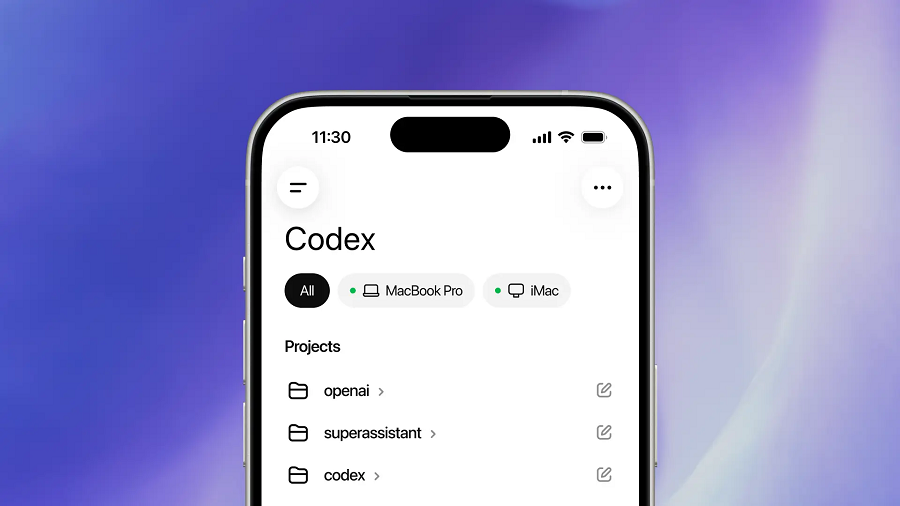
OpenAI has officially brought its powerful AI coding assistant, Codex, to mobile devices, integrating it directly into the ChatGPT app for both iOS and Android users. This significant update, rolling out approximately eight months after Anthropic PBC made its competing programming assistant, Claude Code, available on handsets, promises to fundamentally change how developers interact with their AI coding partners. The mobile access is designed to significantly accelerate software development tasks and reduce inference costs by allowing developers to provide guidance to the AI even when away from their desktops.
The release is not merely a remote control feature; it offers a comprehensive mobile experience for working with Codex. Users can now initiate new tasks, review outputs, steer execution, and approve subsequent steps directly from their smartphones, while Codex continues to run on their laptops, Mac mini, or devbox. This capability is particularly crucial for long-running programming tasks that often require developer input, preventing unnecessary delays and token usage associated with unguided workflows.
Enhanced Flexibility and Control with New Features
Alongside the mobile rollout, OpenAI is introducing two key new capabilities for Codex: Hooks and Remote SSH. Hooks enable users to customize the programming assistant with scripts, offering a new level of control over Codex's behavior. For instance, a cybersecurity professional could implement a script to block prompts containing sensitive company information, or a legal team might use Hooks to log messages for regulatory compliance. These scripts can process both prompts and Codex's responses, allowing for tailored output for each project.
The Remote SSH feature addresses the common practice of software teams working in cloud-based environments. It allows Codex to securely connect to remote development environments via an encrypted network link, making it easier for administrators to manage cybersecurity settings. This means developers can seamlessly work across local and remote setups, with Codex able to access and operate within these managed enterprise environments. Additionally, OpenAI has introduced programmatic access tokens, providing credentials for third-party developer tools to utilize Codex, further expanding its integration possibilities.
A Competitive Landscape and Future Vision
The launch of Codex on mobile comes amidst a competitive landscape, with OpenAI directly challenging Anthropic, which has offered similar mobile remote access for its Claude Code since fall 2025. This move underscores the intense competition between the two AI powerhouses to become the dominant agentic coding tool for developers and enterprise customers. OpenAI's strategy also aligns with its broader vision of a "super app" project, aiming to unify ChatGPT, Codex, and its Atlas web browser into a cohesive desktop experience. The mobile integration is a logical step towards making this AI assistant omnipresent across various devices.
Currently, the mobile integration for Codex primarily connects to macOS systems, with support for Windows expected soon. The feature is available across all ChatGPT plans, including the free and Go tiers, in all supported regions. This widespread availability, coupled with the ability to manage complex coding tasks from a phone, signifies a shift in developer workflows, enabling greater flexibility and continuous progress on projects, even when away from a traditional workstation.
