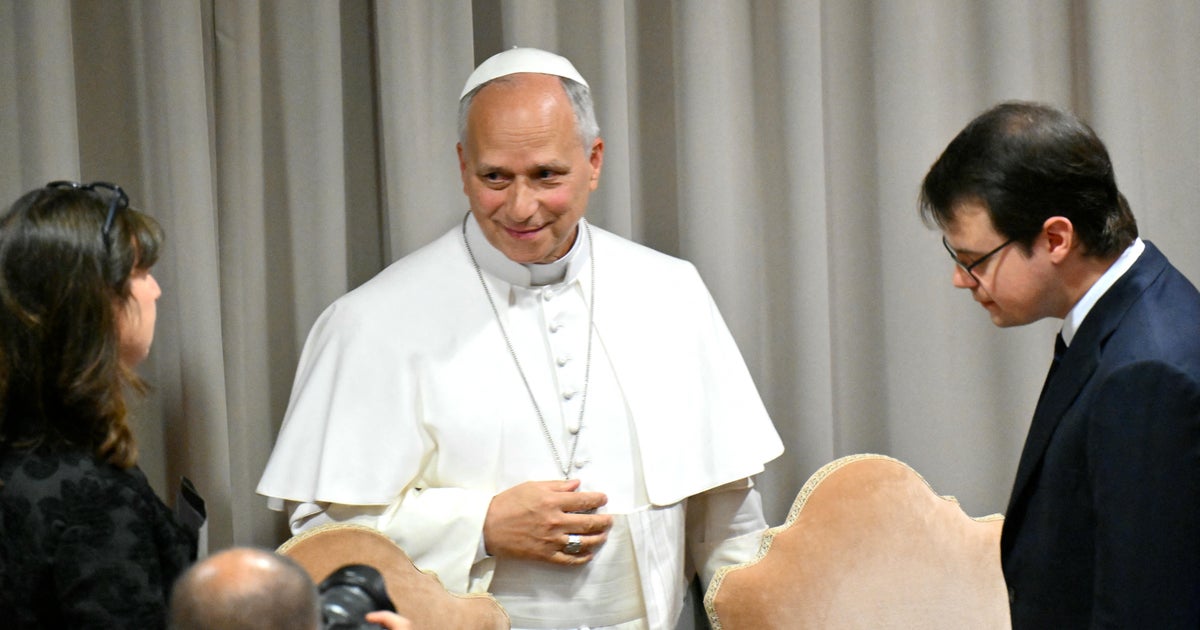
A Profoundly Human Approach to the AI Revolution
Pope Leo XIV has issued his first encyclical, "Magnifica Humanitas" (Magnificent Humanity), a sweeping 82-page document that frames the rise of artificial intelligence not merely as an economic challenge, but as a profound "anthropological" one, touching the very meaning and purpose of humanity. Released on Monday, May 25, 2026, the encyclical calls for humanity to remain "profoundly human" in an age where AI threatens to reduce individuals to "data and performance" and risks making civilization "less human."
The pontiff, who holds a degree in mathematics, deliberately invoked Pope Leo XIII, whose 1891 encyclical "Rerum Novarum" guided the Catholic Church through the Industrial Revolution, drawing a direct parallel between that era's upheaval and the current technological revolution driven by AI. Cardinal Michael Czerny, a Vatican official involved in the document's presentation, clarified that the encyclical is not solely *about* AI, but rather "about the human condition during the time of AI."
Disarming Algorithms and Decentralizing Power
A central theme of "Magnifica Humanitas" is the call to "disarm" AI, a term Pope Leo XIV explicitly stated was "strong" but "deliberately chosen" to awaken consciences. This "disarming" means freeing AI from the "mentality of 'armed' competition," which the Pope argues is not limited to military contexts but also extends to economic and cognitive phenomena. He warned that AI could fuel "a race for ever more powerful algorithms and larger datasets, driven by the desire to secure geopolitical or commercial dominance."
The encyclical directly addresses the concentration of power in the hands of a few major economic and technological actors, particularly those in Silicon Valley. Pope Leo XIV cautioned that when such power is concentrated, it tends to become "opaque and evade public oversight," leading to "new dependencies, exclusions, manipulations and inequalities." He argued that AI amplifies the power of those already possessing economic resources, expertise, and access to data, allowing influential groups to shape information, consumption patterns, and even democratic processes to their advantage.
Combating Dehumanization and Protecting Labor
Pope Leo XIV's encyclical strongly warns against the "risk of dehumanization" posed by widespread AI adoption. He highlighted concerns that AI could hollow out the middle class, eliminate vast numbers of jobs, and deepen inequality. The pontiff stated that the "pursuit of greater profits cannot justify choices that systematically sacrifice jobs," emphasizing that work is a fundamental dimension of human experience, providing sustenance, expression, relationships, and community contribution.
The document also condemned the use of AI in warfare, asserting that "no algorithm can make war morally acceptable" and that it is "not permissible to entrust lethal or otherwise irreversible decisions to artificial systems." Pope Leo XIV urged that AI development be accompanied by verifiable measures to protect employment, retrain workers, and ensure their participation, rather than leading to exclusion. He stressed that technology is never neutral, reflecting the interests and stakeholders behind its creation, and called for greater political involvement to slow down rapid technological acceleration and protect community participation.