Pre-Trial Settlement Attempt and Ominous Warning
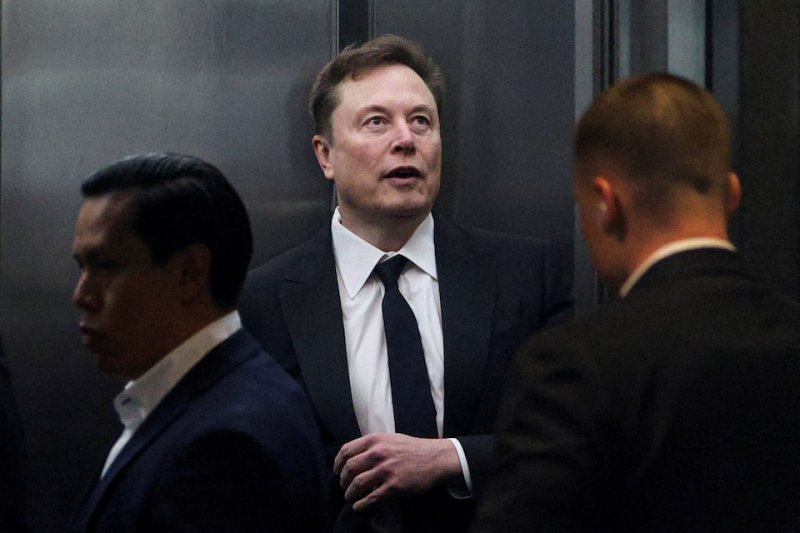
Just two days before the highly anticipated trial commenced, Elon Musk reportedly reached out to OpenAI President Greg Brockman to explore a potential settlement in his lawsuit against the AI giant. However, the discussions quickly soured. When Brockman suggested that both sides drop their respective claims, Musk allegedly responded with a stark warning: "By the end of this week, you and Sam will be the most hated men in America. If you insist, so it will be."
OpenAI's legal team has since attempted to introduce this alleged text exchange as evidence, arguing that it reveals Musk's true motive and bias in pursuing the lawsuit: to attack a competitor and its principals. While a judge initially ruled settlement communications inadmissible, the court may allow Brockman to testify about the message, potentially shedding light on Musk's intentions behind the litigation. This incident echoes a similar alleged settlement threat made by Musk during litigation related to his bid to acquire Twitter.
The Core of the Lawsuit: Nonprofit Mission vs. For-Profit Ambition
Musk's lawsuit, filed in 2024, alleges that OpenAI, under the direction of Sam Altman and Greg Brockman, abandoned its founding mission to serve as a nonprofit developing AI for humanity's benefit. He claims that his initial investment of approximately $38 million between 2015 and 2017 was intended to support a public good initiative, not a profit-driven enterprise. Musk is seeking sweeping remedies, including changes to OpenAI's leadership, the unwinding of its for-profit arm, and damages reportedly valued at $150 billion, naming both OpenAI and its major backer, Microsoft, in the lawsuit.
OpenAI, however, maintains that Musk pushed for a for-profit structure and is only pursuing legal action to undermine a competitor after failing to retain control of the company. Musk left OpenAI's board in 2018 and subsequently founded his own AI company, xAI, in 2023, which is now part of SpaceX.
Brockman's Testimony and Financial Stakes
During his testimony, OpenAI President Greg Brockman revealed that his previously unreported stake in the company is worth more than $20 billion, and closer to $30 billion, despite not having personally invested any cash into the company. Musk's legal team presented evidence, including a 2015 email where Brockman stated he would donate $100,000 to OpenAI, a donation he later testified he never made. Furthermore, a 2017 email chain showed that OpenAI CEO Sam Altman compensated Brockman with a $10 million stake in Altman's family office for his work at OpenAI.
Musk's lawyers utilized Brockman's diary entries from 2017 in court, which included statements like "Financially what will take me to $1B?" and "It all comes down to the money. We can get it from Tesla, probably. We could also probably get it from Google." These entries were presented to argue that Brockman was driven by financial incentives rather than OpenAI's original nonprofit mission to develop safe AI for humanity's benefit. Brockman also acknowledged that his personal equity in AI chipmaker Cerebras likely gained value after OpenAI's $10 billion chip-purchasing agreement with the company.
The Broader AI Landscape
The lawsuit unfolds amidst a dynamic and rapidly evolving AI industry. AI chip maker Cerebras, a "cozy partner" of OpenAI, is reportedly on track for a blockbuster IPO that could value it at $26.6 billion or more. Meanwhile, Sierra, another player in enterprise AI, recently raised $950 million, bringing its total capital to over $1 billion. The U.S. cybersecurity agency CISA has also issued a warning about the "CopyFail" bug, actively exploited in hacking campaigns and posing a significant risk to Linux servers and data centers. This highlights the critical security challenges accompanying the rapid advancements in AI infrastructure.
