AI Boom Fuels Record Profits and Labor Unrest
Samsung Electronics is currently experiencing a period of unprecedented profitability, largely fueled by the surging global demand for artificial intelligence infrastructure and high-bandwidth memory (HBM) chips. Analysts estimate that Samsung generated approximately $38 billion in operating profit in the first quarter of 2026 alone, driven by higher memory prices and substantial orders from large data center customers. This financial windfall, however, has ignited a significant labor dispute, with tens of thousands of Samsung semiconductor workers demanding a larger share of these profits.
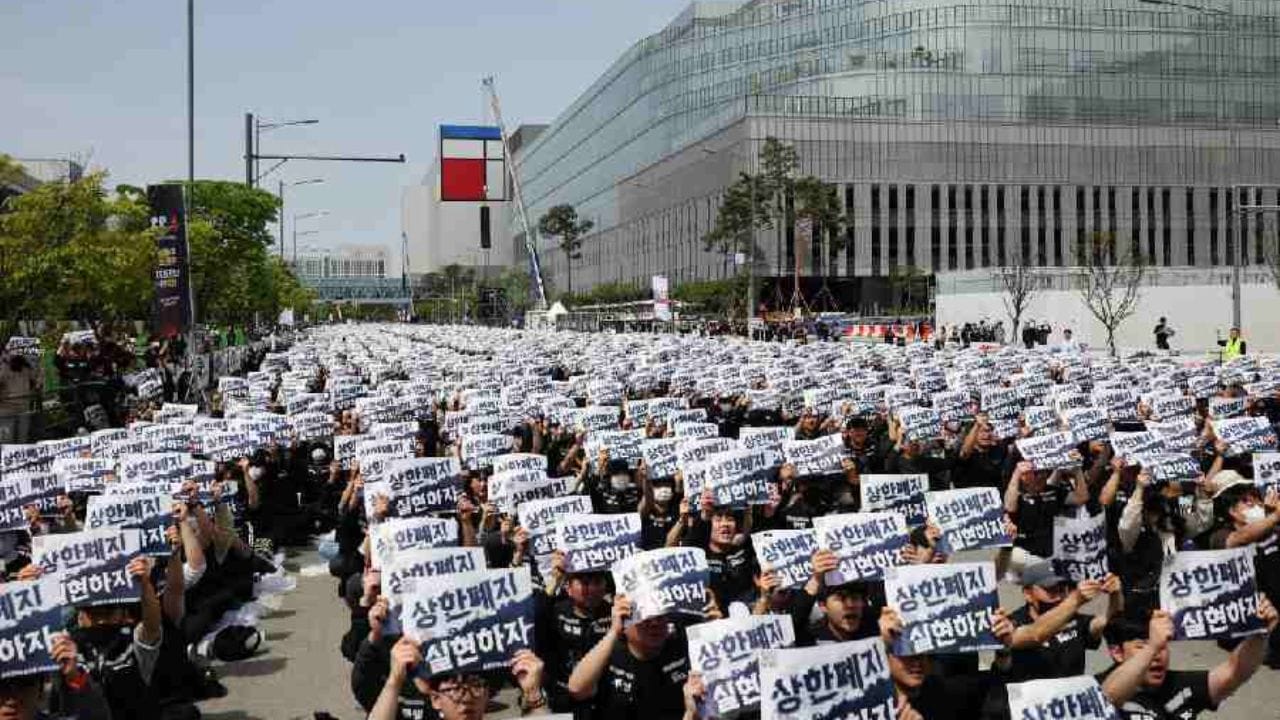
On April 23, 2026, up to 39,000 Samsung semiconductor workers rallied in Pyeongtaek, South Korea, to voice their demands. The scale of this demonstration marks one of the largest organized labor actions in Samsung's history. The workers are threatening an 18-day strike starting May 21 if negotiations fail, a move that could severely disrupt the global supply of AI chips.
Union Demands and the SK Hynix Comparison
The core of the union's demands centers on two key points: the removal of caps on performance bonuses and the allocation of 15% of the chip division's operating profits to employees. Based on current profit forecasts, meeting the 15% demand could translate to an average of over $400,000 per worker across the roughly 74,000-strong workforce the union represents. The union has rejected management's counteroffer, which included a 10% profit share for bonuses, a 6.2% wage increase, and benefits like mortgage loan support.
A significant factor fueling the workers' discontent is the compensation practices of Samsung's closest rival, SK Hynix. SK Hynix, also a major producer of HBM chips essential for AI accelerators, recently reported its best-ever quarterly results and announced average bonuses of approximately $400,000 per employee. This disparity in compensation has led to a noticeable talent migration from Samsung to SK Hynix, with some former Samsung employees reporting earning significantly more at the rival company. The union argues that while management attributes profits to external market conditions, it is the employees' efforts that sustain Samsung's position as a leading semiconductor producer.
Potential Impact on the Global Tech Landscape
The looming strike poses a substantial threat to the global technology landscape, particularly the burgeoning AI industry. Samsung and SK Hynix together account for approximately two-thirds of global memory chip production. Their HBM3E chips are critical components for Nvidia's H100 and Blackwell GPU families, which are central to AI data center buildouts worldwide. An 18-day strike, as threatened, could introduce a category of supply chain disruption that AI infrastructure buyers have not yet factored into their procurement planning or risk models.
Union officials estimate that a walkout could cost Samsung more than 1 trillion won (approximately $700 million) per day, highlighting the significant operational and financial impact of prolonged industrial action. Disruptions could lead to delayed shipments, increased chip prices, and affect technology manufacturers reliant on Samsung's DRAM and NAND output. This situation could also provide a competitive advantage to rivals like SK Hynix. The dispute signals that labor costs in the semiconductor supply chain are becoming a variable rather than a fixed assumption, suggesting that compensation pressure at chip complexes will likely intensify as AI profits continue to set new records.
